
Religious Resistance Taking on MAGA
Christian groups are starting to push back

By Kristin Battista-Frazee
There is a religious resistance that is upholding the values most people believe in — human dignity, mercy, feeding and clothing the poor, healing the sick, and welcoming the stranger. We might equate white Christians, who overwhelmingly voted for Trump in 2024 with MAGA, but not all religious followers are on board with that brand of politics.
Republicans have seemingly enjoyed unwavering support from a religious voter base. But the relationship between religion and politics and how religious values are viewed by different groups is complicated. MAGA has masterfully co-opted religion to deepen political divisiveness, and we should study the history of how this happened so we can stop this trend. As the grassroots prepares for 2026, how can liberal and secular activists better partner with religious leaders? And can Democrats win over more faith-based voters and reverse the Republicans’ takeover of Christianity?
We hope to explore this topic in a series of forthcoming articles.
Religious Values Translate Broadly
Religious leaders can strike a chord like few others. Their commitment to faith and moral principles commands respect from many corners of the electorate. Yet religious values often overlap with secular democratic and liberal principles. There are many striking examples.
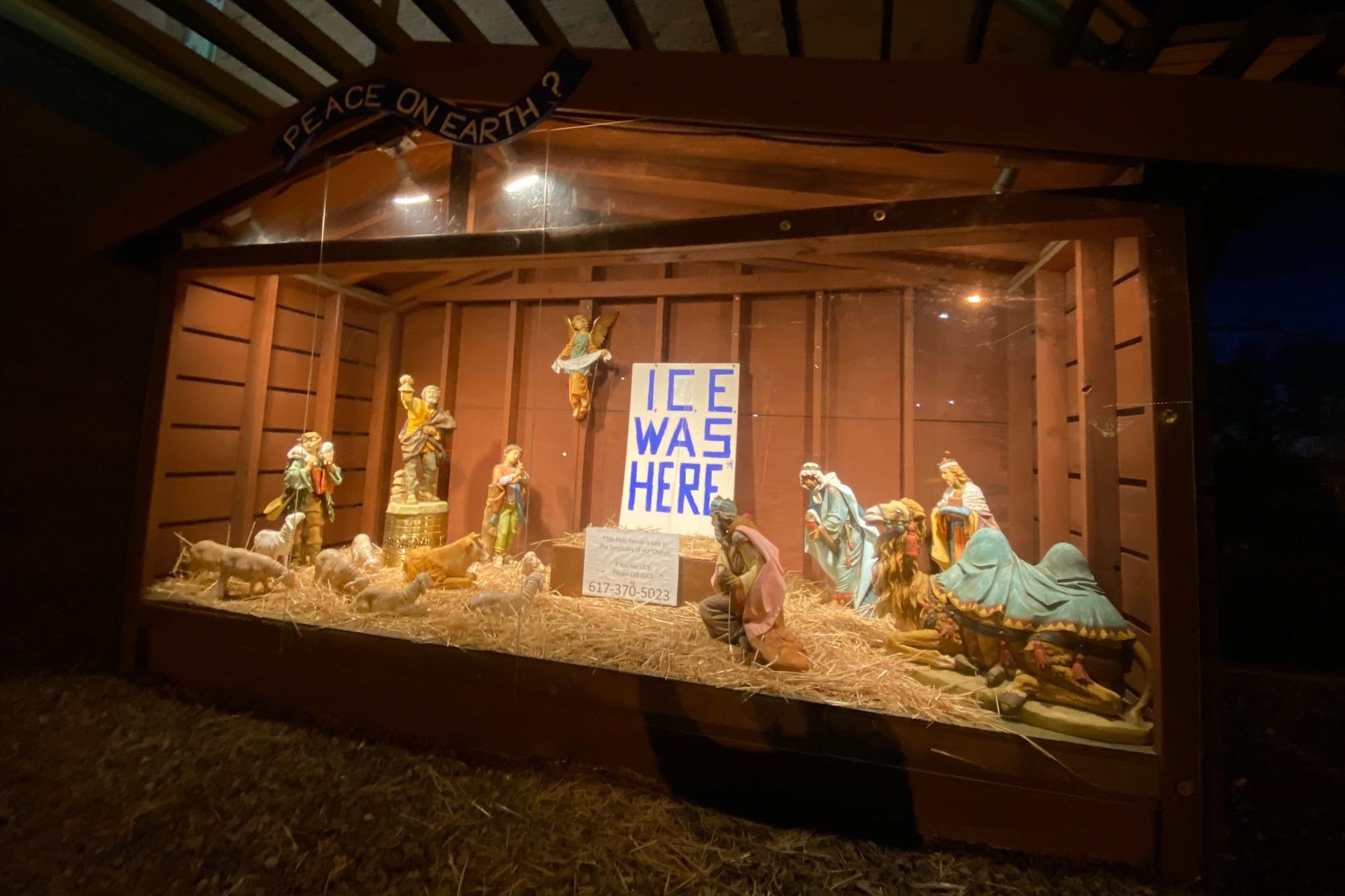
Last November, the United States Conference of Catholic Bishops issued a special message (statement and video) speaking out against the Trump Administration’s inhumane immigration policies and deportations. A few days after the bishops spoke out, Pope Leo expressed his concern about the violent and at times, ‘extremely disrespectful’ treatment of migrants in the United States. Religious organizations are suing the Trump administration over the rollback of policies which had prohibited ICE into their sanctuaries.
Democratic politicians such as Raphael Warnock, U.S. Senator from Georgia, James Talarico, Texas State Senator running for the U.S. Senate in 2026, Josh Shapiro, Governor of Pennsylvania, and Andy Beshear, Governor of Kentucky, have emerged to weave their religious beliefs into liberal policies. These politicians appeal to religious and non-religious voters alike.
Anne Nelson, author of Shadow Network: Media, Money, and the Secret Hub of the Radical Right, offered a perspective on how voters’ spiritual or religious backgrounds can impact politics and reconnect them with core values. ”Even if people don’t go to church every week, there is a profound cultural resonance that echoes in their lives if they attended church in the past,” Nelson said. “When Andy Beshear says, ‘Don’t talk about food insecurity, say, Feed the hungry,’ he shows us that you don’t have to quote the Bible. If you use language that is resonant with the Bible, it’s going to land totally differently than policy speak.”
Other faith focused organizations reject the MAGA line and the vitriolic rhetoric Republicans have used to denounce Democrats. Vote for Common Good is steering faith-based voting away from MAGA and also training candidates to reach out to religious voters. The United Church of Christ (UCC) has opposed Project 2025 with its own response. The American Values Coalition (AVC), a non-partisan organization founded in 2021, is providing a place for evangelicals to heal relationships broken by hyper-partisanship and political tribalism. AVC also supports pastors through the J29 Coalition, helping them lead through these politically divisive times. There are other examples, too numerous to list (see some more examples below.)
How Did Republicans Co-Opt Religion?
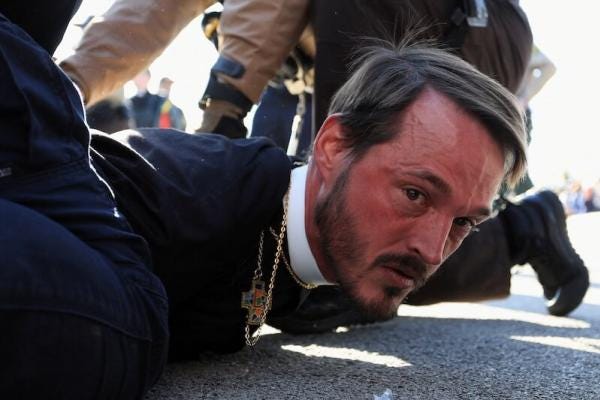
Trump and MAGA world claim to be reflective of true religious values, yet their values are not recognizable to many observant Christians. The merging of MAGA and Christianity has complicated people’s feelings about religion. The conflation of patriotism and piety with voting practices is not new, but it is more pervasive than in the past. So, how did we get to a place where religion has been weaponized against Democrats? We can pinpoint a few milestones.
In the 1970s, the march toward leveraging Christianity for Republican political gain, led mostly by Southern Baptists, began to take shape. In August 1980, the Moral Majority and the First Baptist Church in Dallas, Texas, hosted the Religious Roundtable’s National Affairs Briefing featuring presidential hopeful Ronald Reagan. Reagan wowed the crowd, and a powerful alliance was born. Throughout the 1980s, Republicans, whose main objectives at the time were less government, lower taxes, and foreign policy, leveraged a vast network of religious voters who could be motivated to vote Republican based on divisive social issues like abortion and gay rights.
Their efforts were successful. Today, it’s commonly known that where, how, and whether you worship is indicative of your political leanings. A February 2025 Pew Research shows that among “highly religious White Americans, a solid majority identify with the Republican Party or lean Republican (77%). Among White Americans with low levels of religious engagement, a sizable majority identify with or lean toward the Democratic Party (68%). However, there are exceptions across ethnic groups, notably the African-American community.
The vast middle of the country, often overlooked by Democrats, was ripe for establishing Christian networks that gained a foothold in rural communities. This environment produced Rush Limbaugh as well as numerous pastors and Christian commentators, combining religious fervor with politics and disinformation in news programming.
Recent decades have seen the emergence of a number of religious and political organizations with names that include variations of words such as “family,” “freedom,” and “America.” These groups have targeted college campuses and churches with extensive media, data and voter engagement programs. Many of these organizations are run by members of the Council for National Policy (CNP), founded in 1981 and still active today. Their donor network has included the DeVos family, the Bradley Foundation, and the Koch organizations. The network has supported advocacy groups led by major CNP figures such as Ralph Reed (Faith and Freedom Coalition), Tony Perkins (Family Research Council), and the late James Dobson (Focus on the Family).
“You have non-religious money indoctrinating and pushing low propensity voters, from less educated, less informed, and churchgoers in crucial Swing districts and states, to the polls,” Anne Nelson observed. “All of a sudden, you’ve got a major operation where pastors are being courted and given junkets to Washington, and deluged with materials, including sermons and videos (dealing with divisive social issues). Then they tell the congregation it’s a sin to vote for a Democrat.”
Nelson added, “The Religious Right has been dominated by the Southern Baptist leadership in the past, but recently it has become increasingly invested in the Pentecostal, charismatic, and non-denominational churches. These represent the most rapidly growing religious movement, both in the United States and in the world.”
Source: Daily Montanan
Deepening Political Divisiveness Using Religion
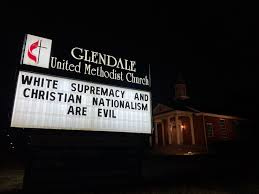
In more recent times, the Republican Party and religious right have taken a sinister turn to further hijack religion by harassing pastors to support Trump and push for Christian Nationalism. The latter is an ideology that America is a Christian nation, the government has a role to keep our nation Christian, and it’s everyone’s patriotic duty to make this happen. Turning Point USA, which has become a Christian nationalist juggernaut, is the biggest purveyor of this political and religious strategy with a massive 80 million dollar-plus budget and millions of members. Take note of Vice-president JD Vance’s recent comments at Turning Point USA’s conference calling America a Christian nation. And consider the demonizing of Democrats from the pulpit in the worst possible terms.
“When pastors endorse Trump or political candidates from the pulpit,” said Napp Nazworth, Executive Director of American Values Coalition, “or when political operatives like Turning Point say, ‘if your pastor doesn’t endorse Trump, then leave that church,’ that’s part of the problem. You’re turning the church of Jesus Christ into a tool of a political party and you lose your prophetic voice.”
“Two big issues that need to be addressed by pastors,” Nazworth added, “are what’s going on with immigration and race and racism across the political spectrum. No matter how you voted, we should be able to agree that you treat people with dignity, that every person is made in the image of God, and should not be mistreated. Churches, pastors, and denominations should be able to speak with a clear voice on these issues.”
While the Republican takeover of conservative Christianity moved forward, Democrats have been less engaged with religious voters and groups. Political campaigns also became more secular, which alienated Democratic leaning voters of faith, especially Hispanics. The growing shift towards secularism and the sheer diversity of religious views in the Democratic party contributed to a disengagement with religious groups.
As we work in our communities and cast a wide net for Democratic voters, we could include religious-leaning people and organizations. The resistance is a big, welcoming tent and, to be successful in 2026, we will need people from every corner of the country who share our values. Please share your stories about faith-based and religious grassroots activism with The Grassroots Connector. We would be happy to publish further articles on this topic.
-----
There are many resources and organizations that share information about Christian Nationalism and faith-based organizing; here are just a few worth mentioning.
Featured in this Article
Podcasts, Webinars, and Documentaries
Reveal Podcasts:
The Bible Says So…Or Does It, interview with Dan McClellan
Ruth Braunstein podcast: When the Wolves Came
Markers for Democracy webinar, The Evangelicals You Don’t Know
Organizations
Books, Articles, and Substacks
Religious Right Fuels National Attack on School Boards, Exploiting Parental Frustration Over Covid Restraints, Anne Nelson, The Washington Spectator
God and QR Codes for Trump; The Courage Tour Goes to Michigan, Anne Nelson, The Washington Spectator
For Such A Time As This, Substack by Andra Watkins
Michael Wear, Founder, President, and CEO of the Center for Christianity and Public Life, Wear We Are Substack
The Party Faithful: How and Why Democrats Are Closing the God Gap, Amy Sullivan
Faith, Politics and the 2010 Election - Brookings Institute study on faith voters by E.J Dionne and Dr. William Galston