
Be Safe, America
Somali-American author of “America Made Me a Black Man,”reaches out from Minneapolis
By Boyah J. Farah
“Be safe,” my mother begins every conversation when she calls each morning from Somalia. “And stay home.” Her fearful, echoing voice is not meant only for me; it speaks to every immigrant in America, even to black and brown native Americans, who sense the uncertainty of the America now taking shape.
It is an eerily cold Sunday morning in Minneapolis—January 25, 2026. I wake, reach for my phone, and see seven missed calls from my mother. ICE is already on my mind—our shared nightmare in Minnesota and across America. But the sheer number of her calls fills me with fresh dread, and I immediately rush to return them.
Before I retreated to bed last night, I spoke to my roommate about what to do if America descended into the landscape of our childhood memories—where neighbors turn on each other as enemies, all fueled by the hateful narratives spun by the politicians of 1990 Somalia. We see what you do not, for we, Somali Americans, carry the trauma of our past long before we called ourselves Somali Americans.

I wonder if my mother heard that I was at the vigil for Alex Pretti last night—the VA nurse shot and killed by federal immigration agents in Minneapolis. Americans from all walks of life stood together in grief, in tears, in uncertainty and shock, as if they were losing their country, their way of life, their streets, and the immigrant communities with their foods and cultures. America is in shock.
For me, this moment stirs the dormant trauma I carry from Somalia’s civil war. Yet it also awakens the deep reservoir of love I have for this country. Without America—without it adopting me out of the horror of war—I wouldn’t be educated, a father, or a known writer. America has been a warm home for me, my family, and millions of others. If surviving pain turns into gathered wisdom, then I see what so many of you cannot see.
Fear thickens as the weather grows colder, as black ice spreads across the streets of Minnesota. Like a bird without wings, eyes without tears, a shivering spirit that has witnessed the grotesque intimacy of death—a heart without feeling, love without emotion, an old man without gathered wisdom—I outlive the hurt. So, I can write to you, trying to warn you away from the house of man-made destruction. Remember: it is easy to destroy, but hard to build.
ICE is flirting with confrontation, with theater-like violence, testing the reactions of Americans. Others urge disengagement, as if refusing to look will make ICE irrelevant. If death and life dance together like lovers in shivering Minneapolis cold, equilibrium becomes our hope—where life still exists and stabilizes.
The Somali-American girl next door hasn’t left the house in weeks, sinking into depression from fear of a Trump America, where masked men with guns lurk like predators beyond the piles of snow. So, as a writer, I told her to keep a journal like Anne Frank’s, for in the midst of unimaginable horror in Germany, she wrote, “Where there is hope, there is life.”
When I finally return my mother’s call, she repeats herself. “As your mother, I want you to be safe.” I do not remember her ever needing to remind me that she is my mother. This time, she reinforces her demand: stay home.
At the vigil for Alex Pretti, Americans moved quietly through the cold, some lighting candles, others standing in stunned silence. I stood among them, thinking. I am not new to this kind of grief. I have seen war, civil war, and the ugliest sides of humanity. I have read Night by Elie Wiesel, but I also carry my own version of that story—buried deep in my spirit.
What I am witnessing now reawakens a trauma I have tried to keep dormant.
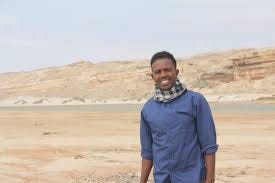
In 1992, my best friend Omar and I watched a man stoned to death in Kismayo, Somalia. As stones struck his body, blood oozed from his nose and ears. He never cried. Instead, he said, “Kill me the way a man should be killed. Kill me with honor, for I am a man.” The white sand of the beach lifted into the air, carried by the wind. His lips moved as if in prayer. His eyes held no tears.
That was the first hero I ever met—and he died before us. As children, we believed that if death ever came for us, we would face it the same way: brave, silent, unbroken. Violence is evil. We were just boys in the war wagon.
Now, decades later, my mother’s fear follows me everywhere—even into the corner store, where I carefully pour dark-roasted coffee while listening to her voice on the phone. ICE trails me down every aisle. Immigrant communities are frightened, but the Somali community is hiding—especially elders whose language, memory, and sense of safety remain tethered to Somalia.
My mother is a widow shaped by survival. She raised children through war, refugee camps, and resettlement. She never learned to read or write, but when I was a kid at Bedford High School outside Boston, she used to force me to sit and read while she watched the movement of my lips over an open book. In her generation, girls were prepared for marriage, not education. Still, she believed her children’s education would secure our place in America.
Like many Somali immigrants now petrified by this moment—a country where masked men can stop you, detain you, even kill you in front of a camera—my mother once loved America. She believed in it. Now, doubt shadows that faith.
“Carry your passport,” she tells me every morning. “If they stop you, read your prayer. Be patient. Give them what they ask for.”
The death of Alex Pretti seals it. If they can kill a white male VA nurse in front of a camera, they can kill Somali-Americans—and no one will intervene.
A drop of rain before the storm: everyone expects this state terror to grow more sophisticated, more routine. This is only the beginning. We are heading toward an unknown place, where America hardens into an authoritarian state. The rich rule, but the poor are not innocent spectators—they carry the skeletal remains of their children.
For the first time, I obey my mother’s warnings. Trump’s ICE has made them real. Hate, perhaps temporary, is replacing the love America once projected to the world. It is easy to destroy a nation. It is far harder to put it back together.
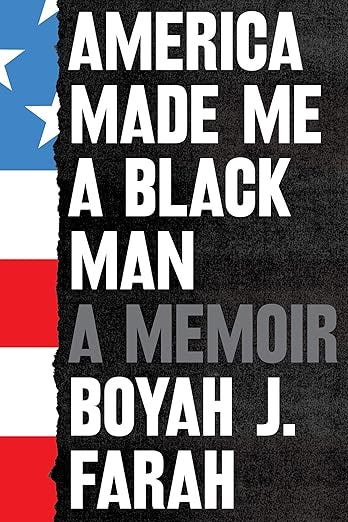
Boyah J. Farah, author of ”America Made Me a Black Man: A Memoir,” is building a science and technology institute in Somalia. https://nugaalschool.com/index.html
Thank you for sharing your story. You are a brave inspiration.