
Crawl, Walk, Run!
How the De-ICE Citizens Bank Coalition became a huge action in just one month
By John Majercak
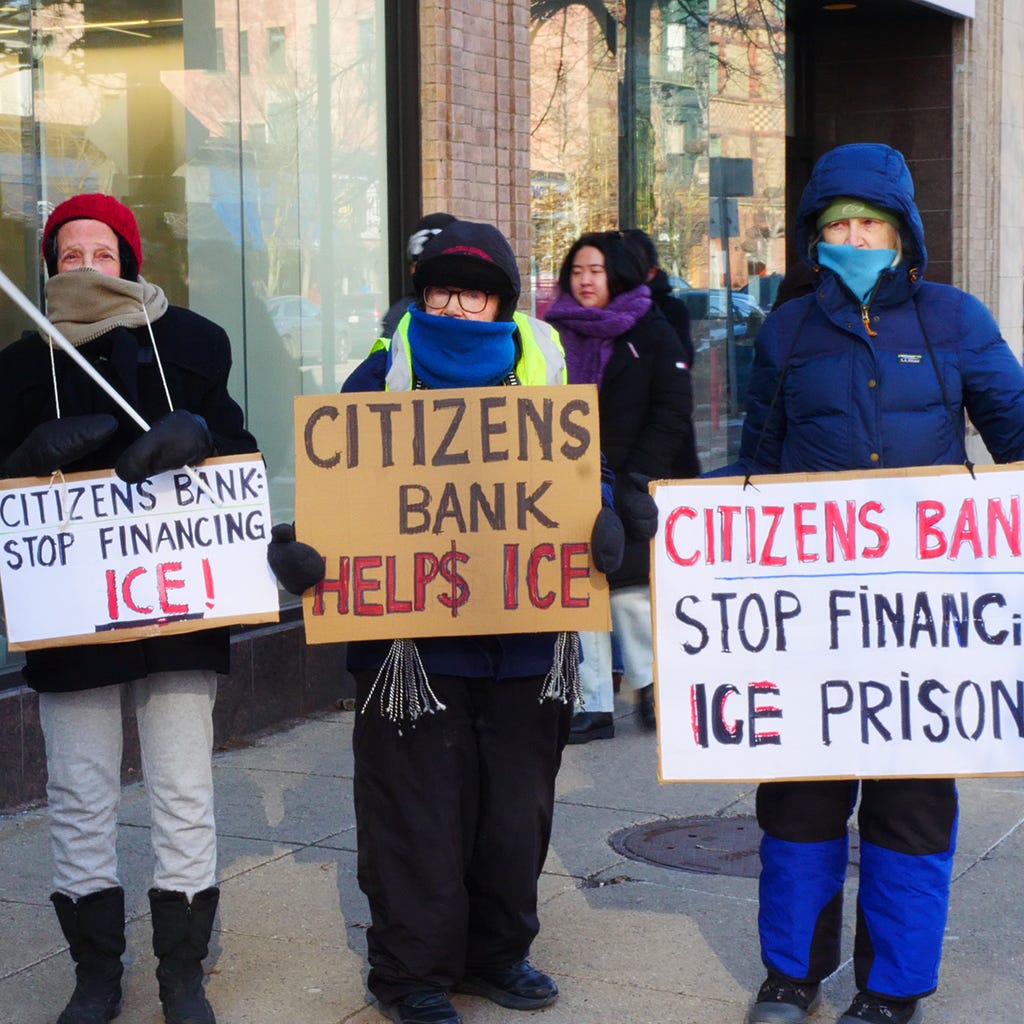
On January 24, just one month after forming, the De-ICE CItizens Bank Coalition had over 1,000 people protesting at 40+ Citizens Bank branches in seven states, from DC to VT. How did we organize so quickly to tell Citizens to STOP financing ICE prisons? By finding common ground and choosing simplicity - what we call our “crawl, walk, run” approach.
We also tapped into existing networks built or strengthened in the past year, and used Google Maps to illustrate the collective nature of the action and ignite peoples’ imaginations.
Why Citizens Bank?
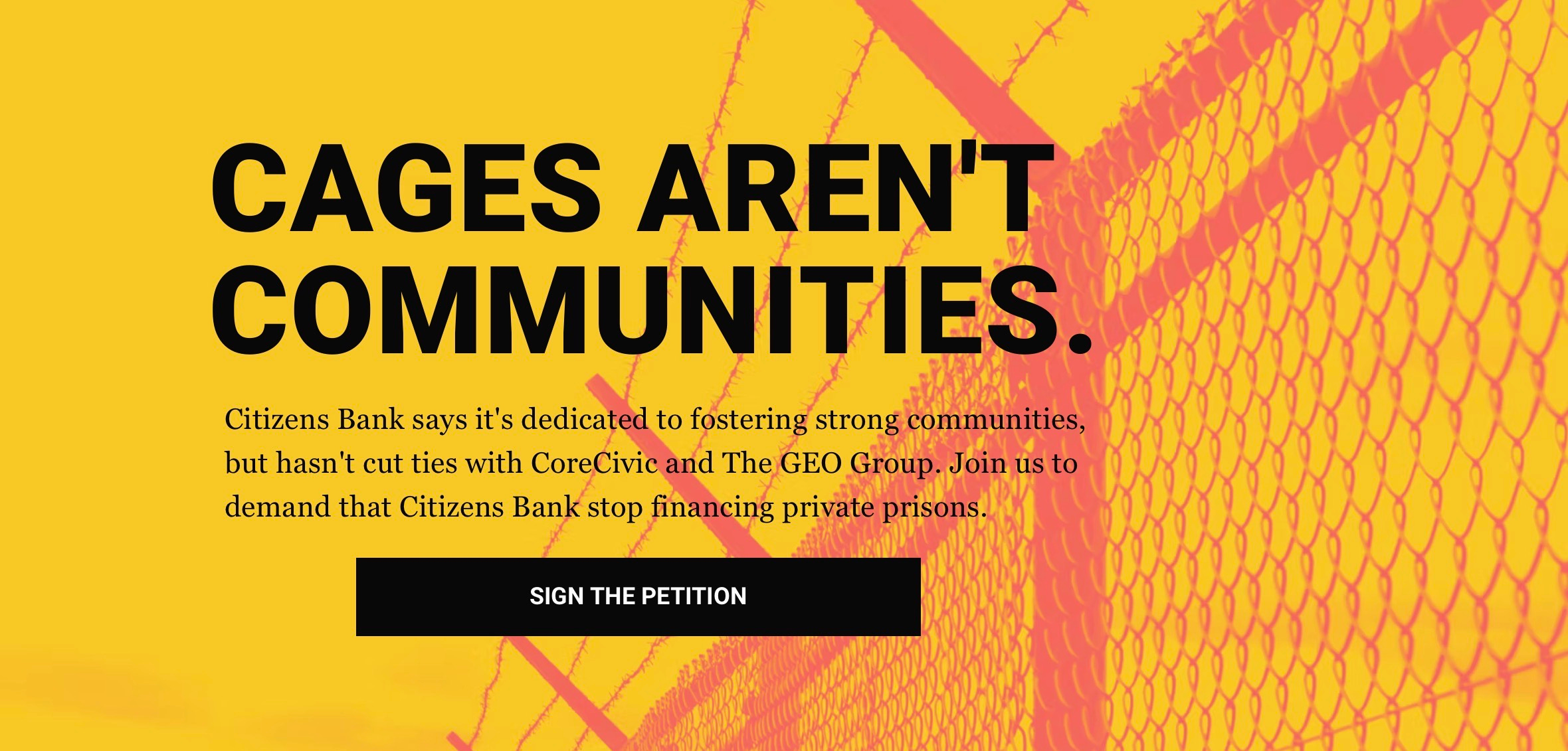
Despite its public commitment to community-centered institutions and social responsibility, Citizens Bank continues to be a major lender to America’s two largest private prison companies, CoreCivic and the GEO Group. These companies build and operate immigration detention centers for ICE. While most other major banks ended relationships with the private prison industry in 2019, Providence-based Citizens has strengthened its ties to that industry.
ICE and the Department of Homeland Security, using $45 billion in new funding from last year’s budget bill, are planning to increase the country’s detention capacity by at least 50,000 beds. The expansion will rely heavily on these same private prison contractors. Both CoreCivic and the GEO Group have been the subject of extensive investigations, lawsuits, and federal audits citing unsafe conditions, medical neglect, labor abuses, and systemic due-process failures within their detention facilities.
With key financial backing from Citizens, these corporations continue to expand a detention system that separates families, endangers detained individuals, and erodes fundamental rights to safety and due process. Banks matter because they provide the financial backbone for more arrests and detentions. Cutting off that support weakens companies that are handsomely profiting from both human rights abuses and the federal government’s abuses.
When our De-ICE Coalition got started, some groups were already taking local action on Citizens Bank. Many were inspired by boycottcitizens.org. So our first step was to reach out to boycott groups in Massachusetts, inviting them to collaborate. Our first meeting revealed a good deal of variation among the groups’ capabilities, tactics and activity levels. There were also far too many good ideas to plan for without spending many weeks of meetings before taking action.
We quickly agreed to look for a common denominator that all groups could get behind - what we called our “crawl, walk, run” approach.
Crawl
First, we researched and verified information about Citizens Bank activities. The Coalition did not immediately call for a boycott. Instead, we planned our collective non-violent stand-out on the same date and distributed common information. We left individual groups free to do — or keep doing — more (weekly standouts, account cancellations, meeting with bank managers, letter writing campaigns, etc.) At the same time, the Coalition would continue developing additional actions for the future.
Walk
Next, we created a steering committee divided into small groups to work on creating flyers, media outreach, recruiting other groups, etc. The website boycottcitizens.org and materials already created by some groups helped us quickly create shared templates. The last year of widespread organizing against ICE really helped us grow, as we tapped into previously developed networks including Stop Avelo, local and state Indivisible groups, multi-state overpass standouts, faith groups, and 50501 state networks.
Another thing that helped was the creation of a Google Map (tinyurl.com/De-ICECItizensBank) of all locations of our coordinated standout. The map was fed by a shared Google Sheet allowing groups with access to add their location. This was a more accessible way to join together because not all groups had Mobilize accounts and the coalition did not have any existing web presence.
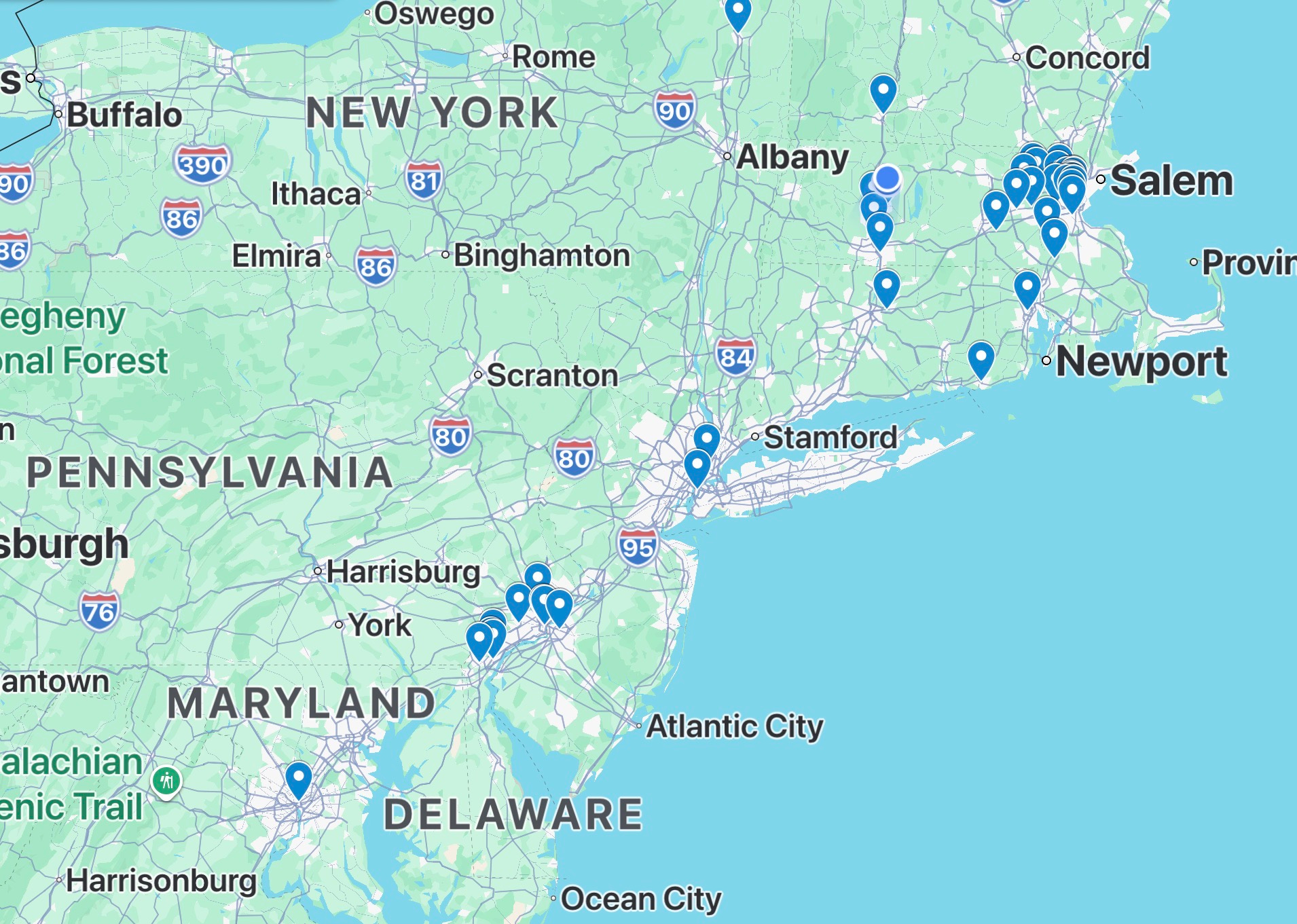
The map quickly captured everyone’s imagination and created a sense of solidarity for upcoming collective action. It also inspired other groups to come aboard. Each time we got another location, its activists reached out to other groups they knew. Before we knew it what started as a few groups in Massachusetts became a multistate coalition! Promotion of the map on social media also helped recruit attendees. The map (including Mobilize listings when available) already has 20,000 views.
Despite an arctic blast of cold on January 24, our first coordinated standout was a huge success - with actions at over 40 Citizens branches in seven states, from Washington D.C. to Brattleboro, VT, including Wilmington, Philadelphia, Hartford, Springfield, Providence and Boston. Some branches had a handful of people, while others had 50. Several had protest choruses leading songs and chants. Another saw handmaids, women dressed from “The Handmaid’s Tale,” show up.
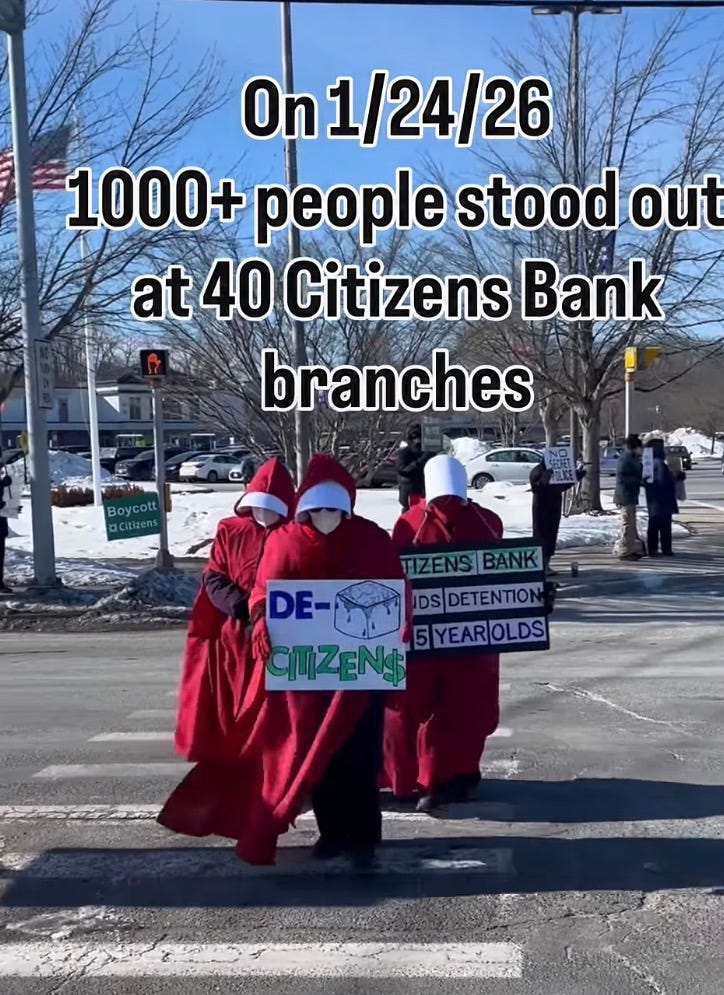
Everyone uploaded photos and videos to a shared drive from which we created a highlights video shared on social media. News media covered a handful of our protests and some groups sent letters to the editor as well. Boycottcitizens.org reported a 759% increase in web traffic that month, and a record setting day of traffic on January 24.
RUN!
Now that we’ve built solidarity and momentum, we are ready to run! Our next coordinated stand out will be Saturday, March 7, from 11-noon (local times may vary). We already know that groups from other states will be joining us, and we are actively recruiting more. In the meantime, many member groups are protesting weekly at their local branches. And the coalition is busy planning other actions, including a larger protest at a central location, group account cancellations, and more - so stay tuned!
To connect with the coalition and join the effort, reach us by email at de.ice.citizensbank@gmail.com
John Majercak is a mostly-retired environmentalist, part-time mixologist and artist, and full-time anti-fascist activist who lives in Western Massachusetts. He volunteers for Indivisible Northampton Swing Left Western Mass.
The speed that this all came together is impressive! The map— always getting updated with more and more locations—is a really effective way to see the action’s reach and to build momentum.
Very good and my thanks and compliments to all the local efforts. There can be a role for your state legislators to get involved. When I served the legislature, there were efforts to divest of state pension investments from South Africa related entities. This was during part timeunder apartheid. It may not have passed, but it did give an opportunity to for state legislators to become involved in international politics. Similar efforts were done during the funding of the contras under Ronald Reagan. I know I’m showing my age.