
Data Centers Draw Grassroots Fire
Pushing Back Against the AI Tide
By Bruce Levine
Team Amazon and Google with big real estate developers, throw in wealthy financiers and the genie of AI, and you’re facing a Goliath, a giant bent on building huge data centers throughout America. Fortunately, there are many Davids among us, ordinary people fighting to keep these costly, eco-disastrous projects out of their towns.
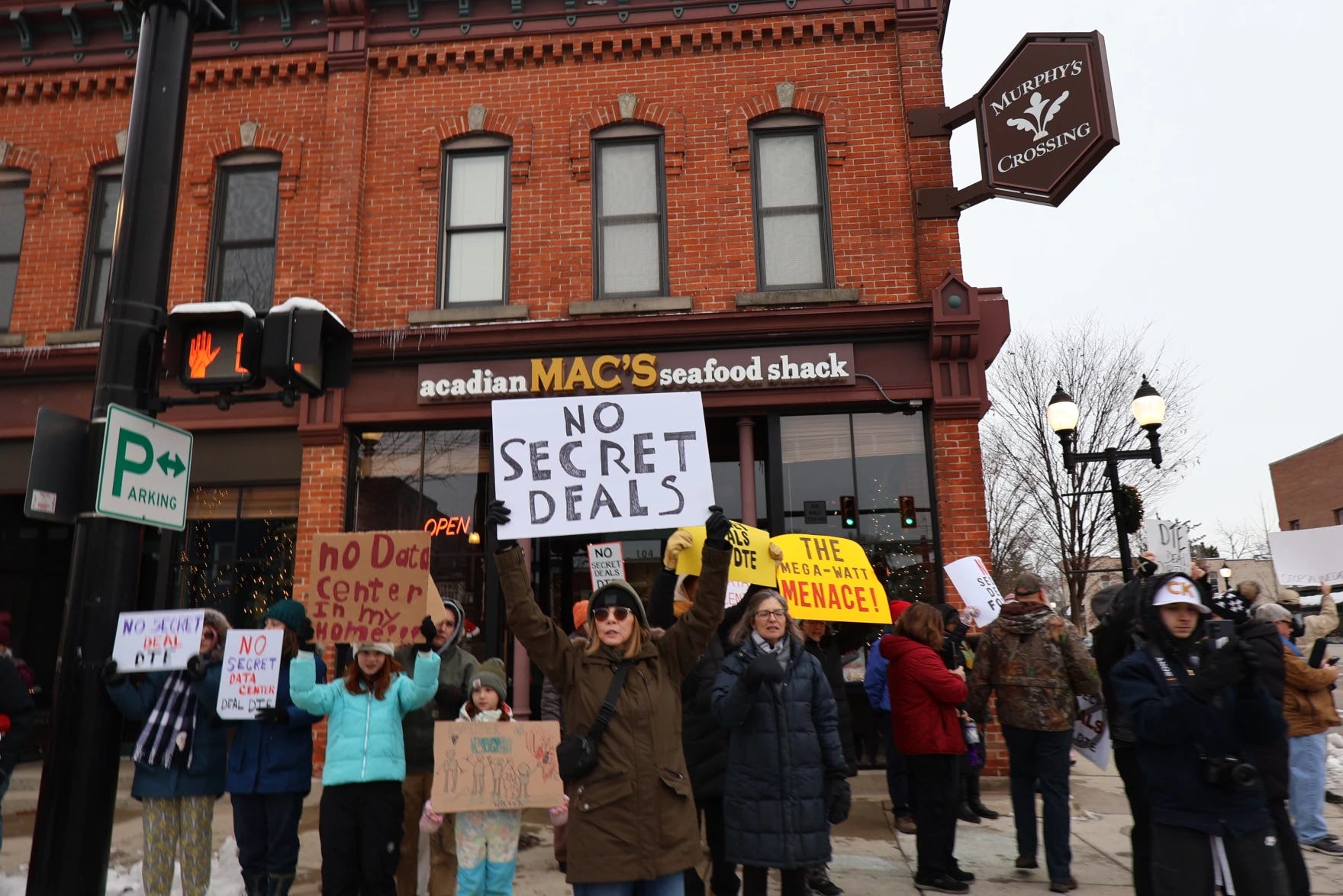
In rural Saline Township, Michigan, residents are fighting a proposed $16 billion data center proposed by Related Digital, Open AI, and Oracle. Despite a judicial decision allowing the project to move forward, the opposition continues, led by citizens who fear the project will take up needed farmland, increase pollution and noise, and spike electric bills. And, residents warn, Saline Township is not alone in facing this Goliath.
“We need every person in Michigan to understand that there’s a data center coming to their back door,” one opponent told Michigan Public Radio. Other Michigan cities have also rallied against data centers, with opposition driven by the grassroots, not by a statewide or national group.
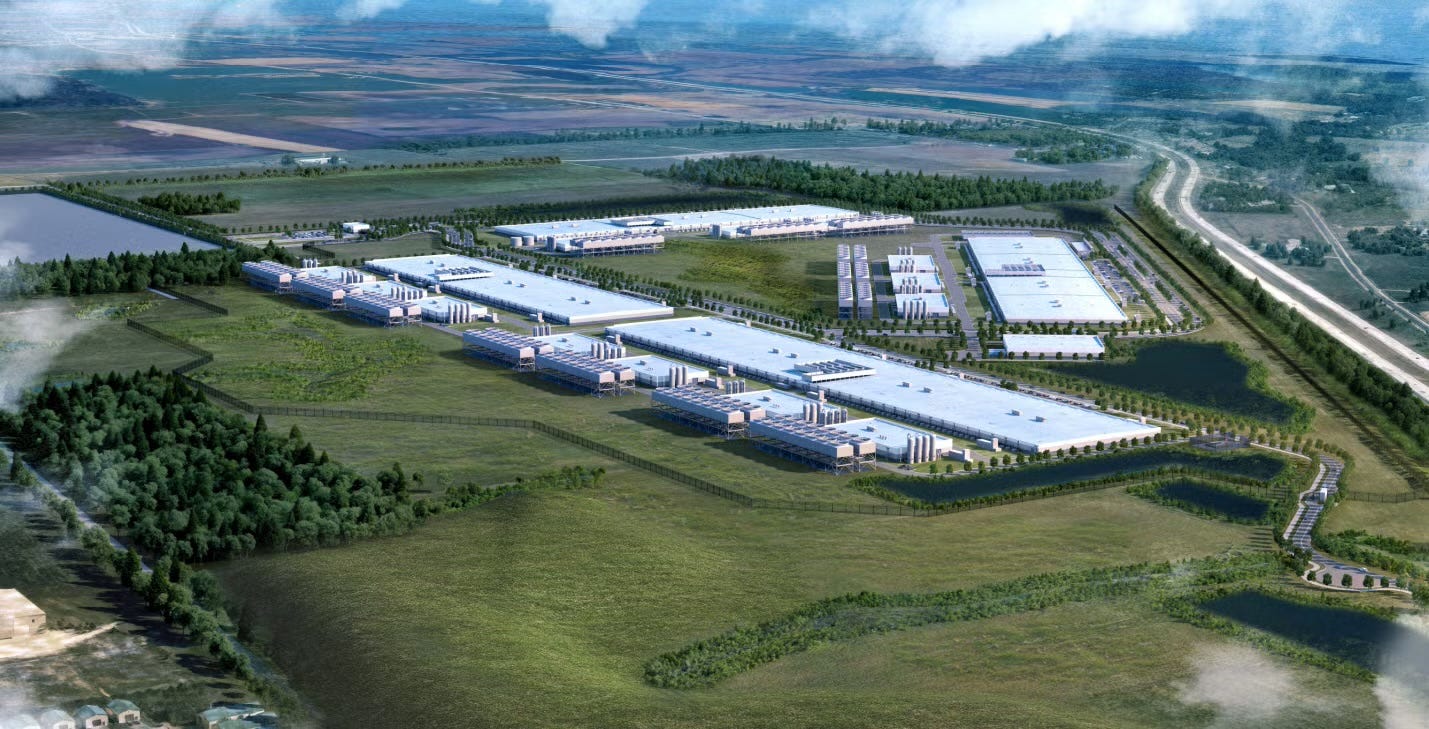
Despite growing opposition, so-called “hyperscaler” companies are plunging ahead with construction of huge data centers to service the needs of AI. These are mammoth facilities. Data centers can occupy hundreds of acres requiring up to a gigawatt of power to drive the servers and other equipment needed to support the large language models that enable AI. Although a definitive count of data centers is difficult to come by, last December the pro-technology American Edge Project counted 4,149 existing centers with another 2,788 proposed or under construction.
Yet as this tsunami swells, resistance arises wherever local populations come to understand the impact of these huge buildings as next door neighbors.
From Maine to Arizona, informed citizens are learning to be skeptical of tech companies, real estate developers and politicians touting the supposed benefits of a local data center. Purported benefits include increased tax revenue and employment, but the reality is that relatively few jobs are created, tax concessions are given mostly to tech companies, and benefits pale in comparison to the significant quality of life issues. These data centers raise electric bills, consume large amounts of water, and create noise. And because they are often sited in or near black, brown, and low-income communities, they raise environmental justice issues as well.
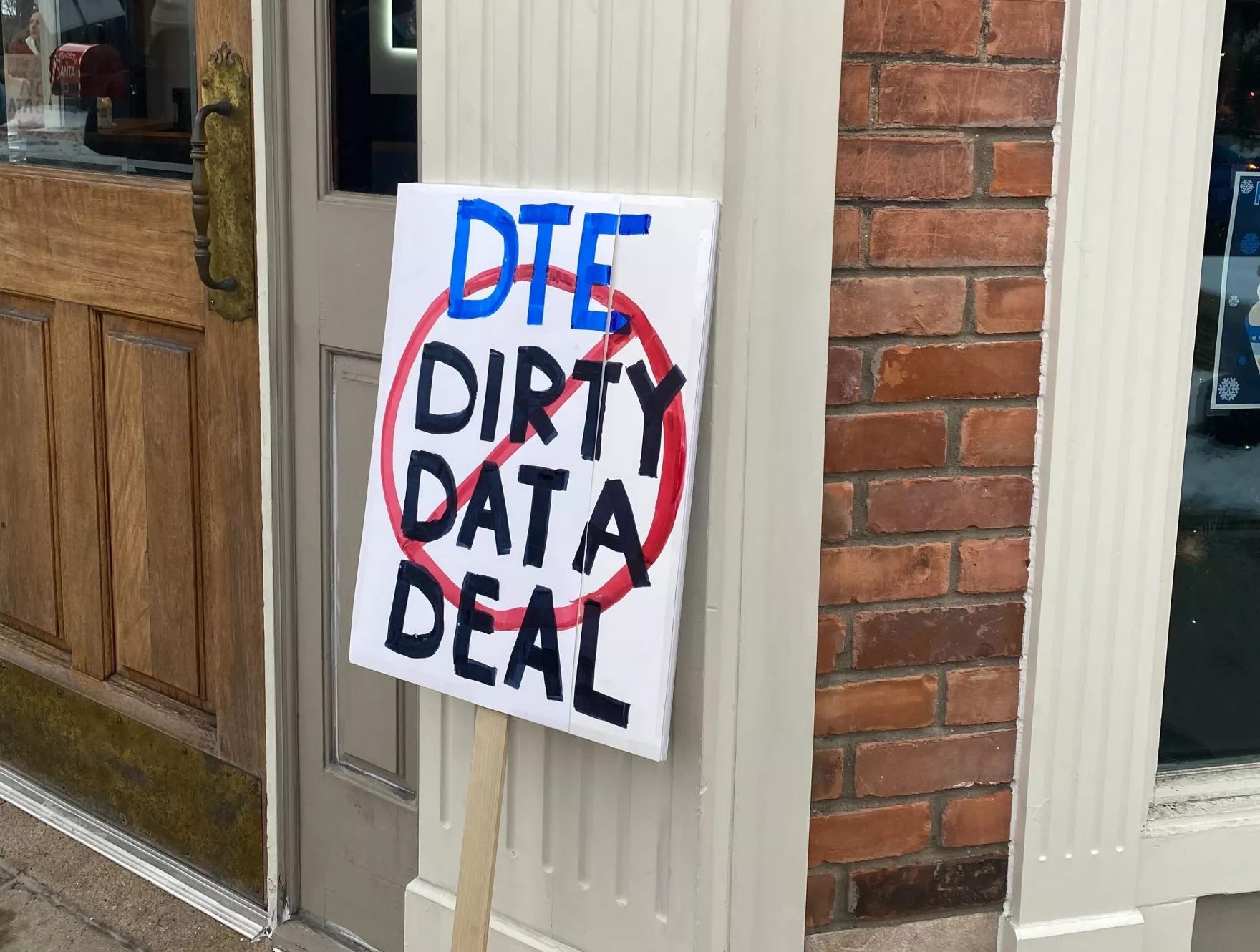
Too often, developers and companies seeking to build these data centers act surreptitiously, without full public awareness of the projects and their impact. To thwart any opposition, local governments have sometimes been complicit in coverups. In Saline Township, residents have protested “secret deals” between developers and politicians, including an effort to fast-track approval. Contracts are often secretive and when made public, can lead to huge redactions in the original project. Politicians are also signing non-disclosure agreements.
With this growing understanding of data center drawbacks, Americans in both red and blue states have pushed back, often with surprising success. In almost half the 50 states, activists are organizing to stop construction or expansion of data centers. According to Data Center Watch, an industry-related research project, $64 billion in data center projects have been blocked or delayed. And this is not just a partisan issue. Elected officials in many towns that overwhelmingly voted for Trump now oppose data centers. In 28 states whose legislators once saw data centers as a prize worthy of tax incentives, bills to roll back such incentives are now pending.
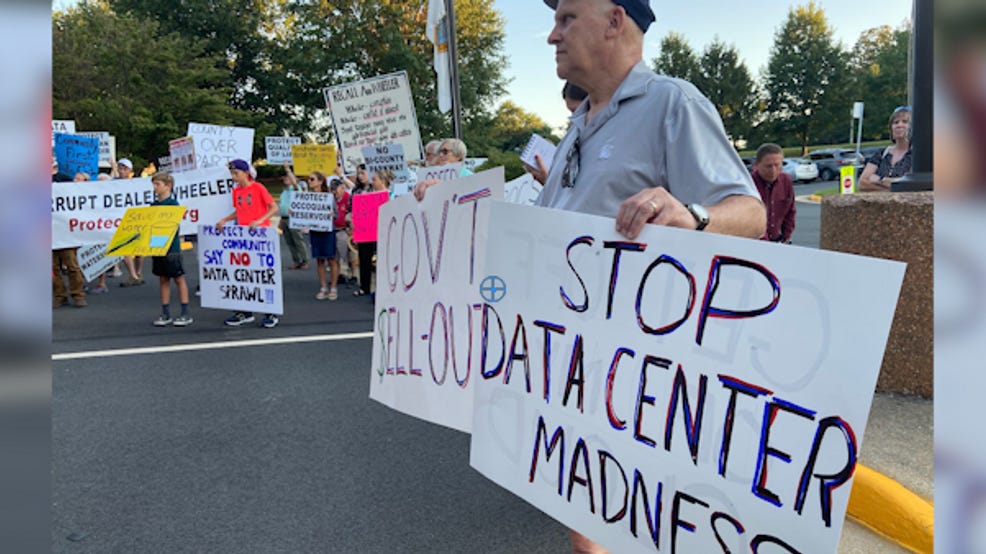
States with major opposition efforts include Pennsylvania, North Carolina, Wisconsin, Missouri, Nevada, Indiana, Michigan, and Maryland. Virginia, whose 663 data centers are the largest concentration in the world, is now a hotbed of opposition, with 42 activist groups campaigning against new centers.
Those confronted with the prospect of a data center in their community can learn from those who have fought back. At a national level, a coalition of environmental and civil rights groups and prominent elected officials is working to curtail the spread of these facilities. These valuable allies have great resources. But while national organizations like the NAACP and Sierra Club can frame the debate and the advocacy, effective opposition has to form on a local basis. And beyond Saline Township, there are excellent examples.
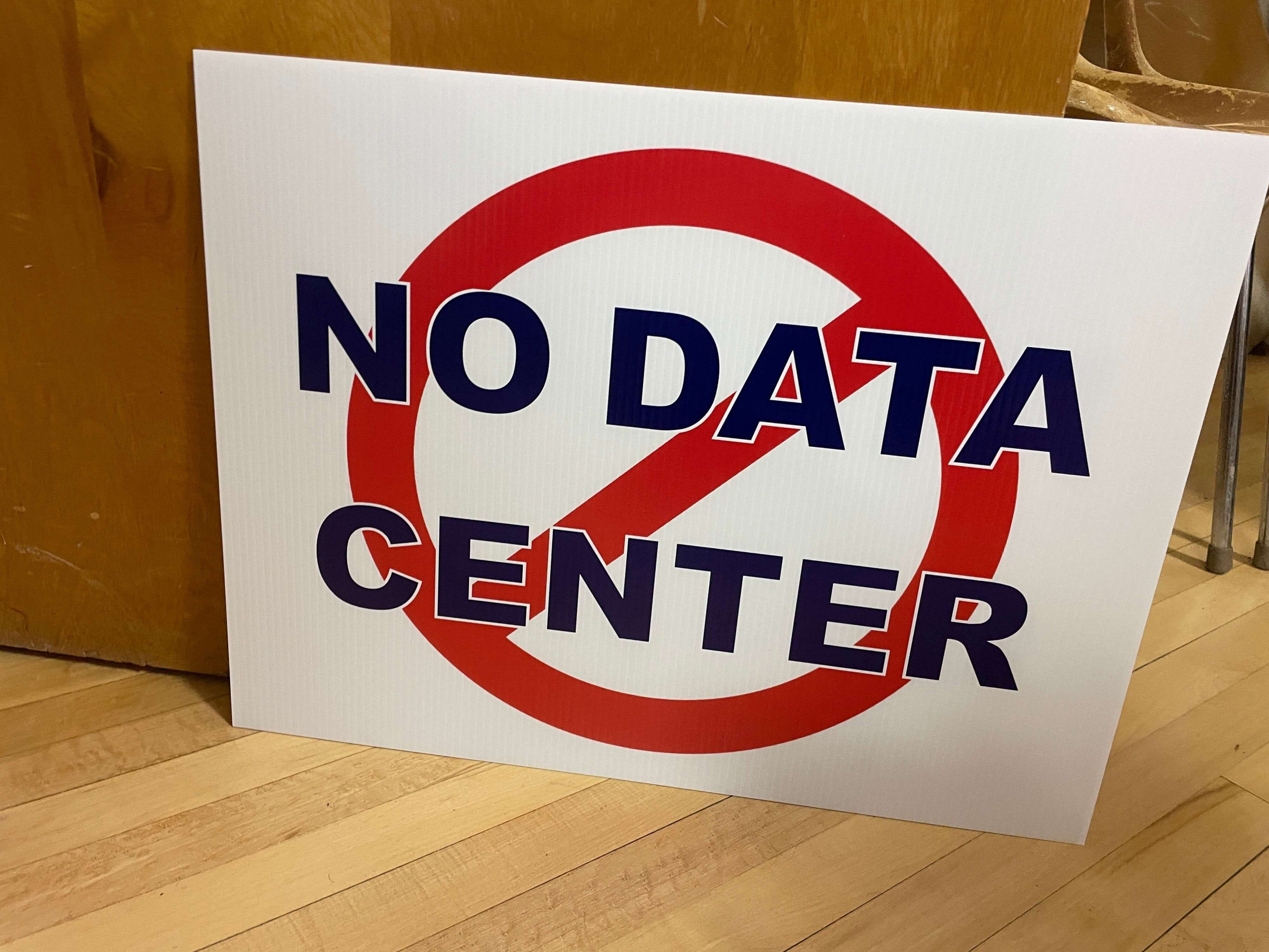
In Seattle, news that four companies planned to build five large centers gobbling up one-third of the electricty that Seattle now uses on an average day led to a huge backlash. Two developers withdrew their plans.
At least thirteen states are considering moratoriums on new data centers. Maine passed such a moratorium but Democratic governor Janet Mills vetoed it, choosing instead to set up a council to examine data centers’ impact in the state. Thanks to grassroots efforts, cities are also considering moratoriums. In Port Washington, Wisconsin, a suburb of Milwaukee, after one large data center was built, opponents came together on Facebook. Protests focused on city council meetings, and a thousand signatures placing a referendum on the ballot were collected in just ten days. Last month, the referendum passed with 66 percent approval, requiring city leaders to obtain voter approval of any future data center.
Next month, Monterey Park, CA residents will decide on a measure seeking an indefinite ban on new data center construction within city limits.
AI is a reality that the US and the rest of the world must wrestle with in myriad ways. The development of data centers is just one aspect of this yet one in which individual citizens, coming together through grassroots organizing, can play a critical role against unfettered expansion.
I'm starting to feel hopeful that data centers will be the straw that breaks the camels back, leading to Americans mobilizing to fight back against the economic injustices we face. Data centers are such a blatant example of the no-loss strategies billionaire are able to utilize at the cost of the working class.
Two maps to help visualize the harm these AI dat centers are causing.
Stratos AI Data Center: Mapping The Deadly Environmental Cost of Utah’s 9GW Data Center
https://thedemlabs.org/2026/05/14/stratos-project-environmental-utah-ai-datacenter-impact-map/
Why is your electricity bill so high? Follow the taxpayer funded handouts to AI billionaires building data centers!
https://thedemlabs.org/2025/10/21/electric-power-bill-costs-ai-datacenter-chatgpt/