
Documenting the Movement
K. Starling documents every protest, every rally

By Martha Merson
You, Grassroots Connector readers, are making history. You are marshalling resources to hold onto democratic principles, rights, and freedoms guaranteed in the Constitution. But who will keep track of your contributions?
K. Starling, author of the popular Substack, We the People Dissent, is documenting our movement through her posts on protests and rallies and her “Dear Future Historians” series.
Starling provides a unique perspective on the grassroots movement by charting rallies and protests of all sizes, including standouts on street corners and bridges. Combing through websites and emails every week, Starling has noticed inspiring trends.
In April and May 2025, Starling counted 450-500 events each week. By summer the number was 650-750. Now she sees 800 as the base, with some weeks closer to 900.
On January 12, 2026, days after an ICE agent killed Renee Nicole Good, Starling logged more than 1,700 protests. Beyond numbers, she eloquently described the mood and the anger:
”In Key West, Florida, a tourist town ravaged by ICE operations, they stood. Marilyn, a local, shared, ‘We had 215 people show up in less than twenty-four hours. It’s our third demonstration in a week.’”
And in Maine: “Standing beside snowbanks, bundled in wool coats and scarves, the people of Maine gathered. On average, the state hosts more than 100 demonstrations weekly. This weekend, they gathered—over 600 in Portland and more than 400 in Belfast. Residents of Rockland met for a silent vigil. In Millinocket, a quaint town nestled on a lake that shares its name, ten souls huddled together. Ten. Even in numbers that can be counted on our fingers, we rise.”
“I’ve noticed the more the mass of people grows,” Starling said, “the bolder the politicians get. In the fight for democracy, it’s the nameless (not the famous) people making the change. We are lending courage/boldness to elected Democrats in Congress.” Starling believes that insisting on accountability will make the difference in the long term.
Starling also gathers and posts stories of actions. For her, no story is too small. “I heard a story about a coffee shop in Portland, Oregon, Heretic Coffee. That story gave me hope for multiple days. So often the story of history is told of the people who made the headlines, but that is not going to happen this time.” Not on her watch.

And finally, Starling publishes letters to future historians that bear witness to what it was like to live through this regime’s attacks on our freedoms. For example, days after the Renee Good killing, Starling’s “Dear Future Historians” letter described how “the aftermath of those three gunshots rattled the nation.” What makes these letters so powerful is that, alongside honest accounts of what people are experiencing, they also share stories of resilience, strength, and determination.
My dear Future Historians, please make note: though we are defiant, we are scared. On Thursday, ICE shot a couple in Portland. They raided and maced students in Minneapolis. They rain unbridled terror on our cities.
As we march, our hands tremble. As we shout, our voices shake. And in the quiet, when we kiss our kids goodnight, we wonder whether we will be next.
Still, with hope, we rise.
How did Starling get started? “After the 2024 election,” she remembered, “I thought, ‘Okay, I need to be involved differently than I have before.’” Like many Connector readers, she wanted to channel her energy to make a difference. She was ready to act. She remembers that post-election period: “I signed up for a dozen newsletters. While I appreciated them, very few had action steps I could take locally. On Threads I was seeing notices about rallies and protests. I thought, ‘What if I made a Substack and put all this information in one place?’”
Behind the scenes
Starling started combing through dozens of newsletters in her in-box. No surprise, the steady stream quickly became overwhelming. Starling followed her impulse to simplify the information. “I have one superpower,” she said, “the ability to organize things.” She started pulling information from various sources and adding it to a spreadsheet. She now tracks specific organizations by consulting their websites and following them on social media. She keeps an eye out for any new boycotts, training opportunities, or campaigns.
Starling usually spends about 20 hours a week documenting protests and tracking down folks to interview. During the week of a big national event such as a No Kings rally, she might spend 30-40 hours. Her Substack subscriptions have enabled her to replace other paid gigs with her political work. And she now has helpers who spend a few hours a week pulling information from websites. “What we count is a rally, march, anything you would bring a sign to. We don’t count canvassing or regular volunteer events.”
Her weekly newsletter helps others plug in. An estimated 27,000 subscribers follow “We, the People Dissent” on Substack. Her spreadsheet with its data points, visualizations, maps and hit counts functions as a written record of 2025 and beyond.
The value of rallies and protests
Throughout 2025 people debated the value of rallies and protests, arguing that they are not a direct line to legislative power. However, Starling is clear about their usefulness. “Protests are the step that moves people. When I ask any activist about their journey, their first thing is almost always a large rally or a local protest. The brilliance of it is these actions build community and build courage. This is the ball that needed to get rolling. You can see in the numbers, the number of groups and growth of events. They build that courage. Then that person might canvass or phone bank. Whatever it might be, it starts with a protest and a sign on a corner. I am a fan; I’ve seen the good they do.”
But for Starling, the story doesn’t end with protests. “Going to a corner protest or a rally is a step, like putting a toe in the water. Once people have dipped that toe, then they are more likely to go to a training or go to a group’s happy hour.”
In a tough moment
For 2025, We the People Dissent offered a final count of protests — 55,000+. “I’m nervous and excited for 2026,” Starling confided.
All her hard work has provided more than a record of resistance. Starling has found her source of hope. “It’s hard not to have hope when you are talking to people on the grassroots level. When you see those numbers and hear those stories, you gather hope from that. We can inspire and encourage one another.”
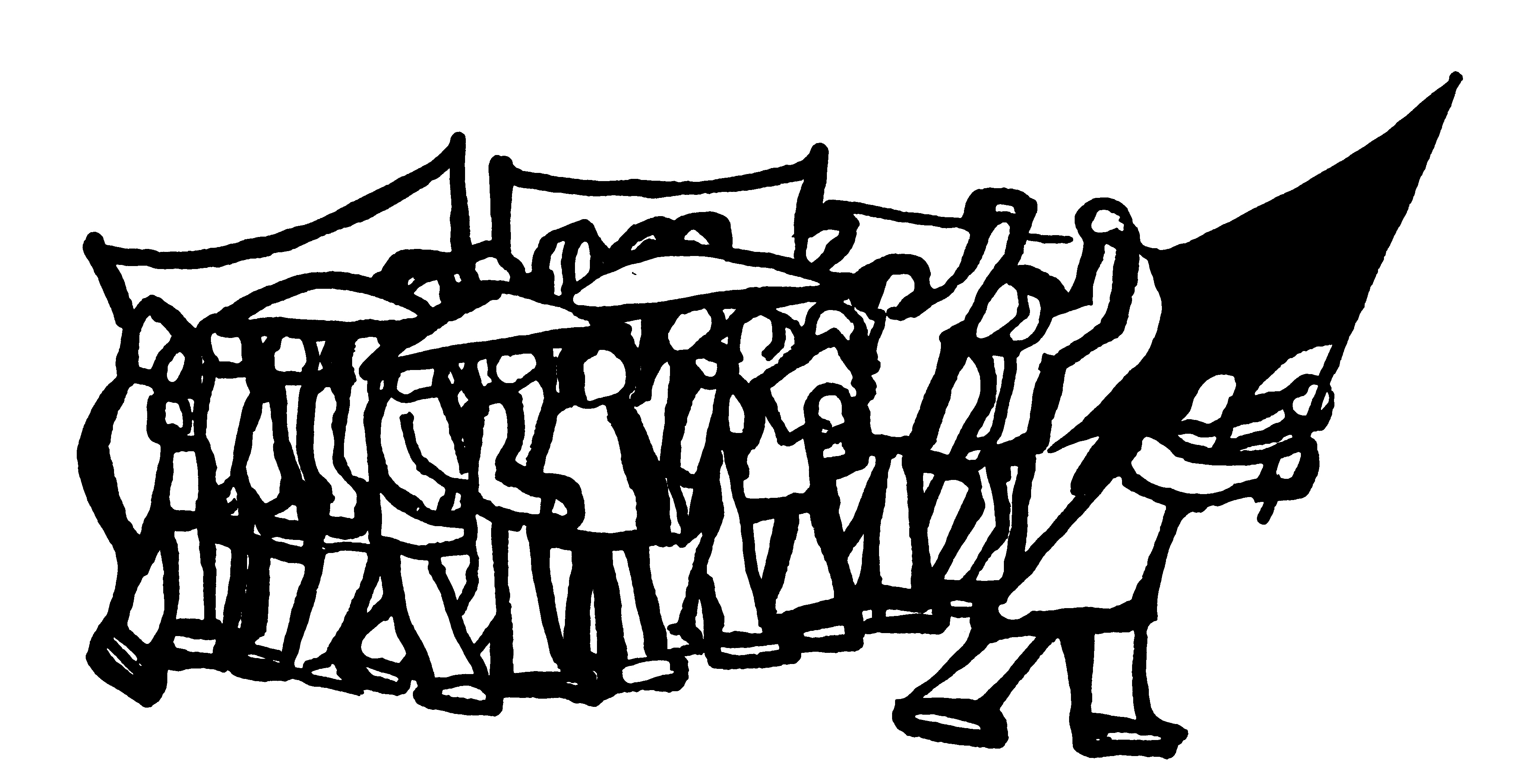
K. Starling is the author of We (the People) Dissent (as well as the fantasy fiction, Talismans, Teacups, and Trysts). The image of marchers is courtesy of Rini Templeton Memorial Fund. All rights reserved.
Tell us: are there activists you’d like to hear more about? Who are some of the activists in your circle we should reach out to?
Thank you for this story. I have a better appreciation of K. Starling's work, which will be an important part of the historical record.
Signs of the Time is documenting in a different way — daily posts of signs and interviews with the maker from rallies across the nation. We hope to inspire others to join and to create a record of the fightback in this moment of our history. Substack @signsofthetime. Insta @ signs.ofthetime