
From Gatekeeper to Bridge Builder
Why Campaigns Need a Grassroots Coordinator
By Annette Sassi
Political campaigns have long relied on volunteer coordinators to manage the people who knock on doors, write postcards, or call voters. But this role needs to be reimagined.
Over the past several years, local grassroots organizations have matured into serious operational entities with their own missions, structures, and experienced volunteers. Unlike campaigns that pop up months before an election, these groups maintain a year-round presence. Long after Election Day, they may have paid staff and run local and special election efforts, publish newsletters, and organize rallies and protests. All bring skills and institutional knowledge that campaigns typically lack.
Yet too many campaigns miss the opportunity to work with grassroots organizations. Failing to recognize the value these groups offer, campaigns often keep their distance in order to maintain their independence.
The Bridge Builder
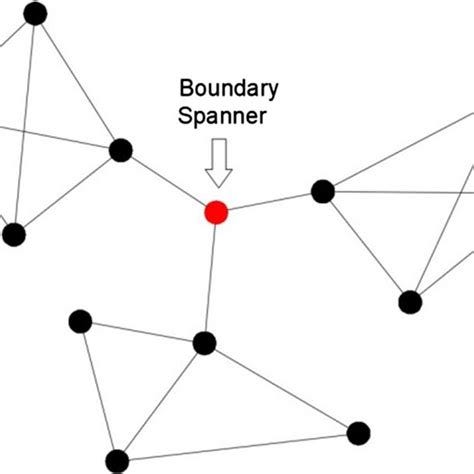
Research on multi-organizational collaboration points to a useful concept: the Boundary Spanner. This is someone whose job is to build and sustain working relationships across organizational lines and note who is working in the community. The Boundary Spanner may be a volunteer, but is far from unskilled. This position entails much more than managing whoever walks through the door. A Boundary Spanner actively cultivates partnerships with grassroots organizations that bring organizing expertise, seasoned volunteers, and deep local knowledge to every campaign. Boundary Spanner might also be known as a Grassroots Coordinator or Local Coordinator.
To understand what this role looks like in practice, we can draw on research in public policy and cross-sector collaboration. Satheesh et al. (2023) identified four core activities of effective Boundary Spanners.
Core Activities
Relationship building: Effective Boundary Spanners cultivate both formal and informal relationships across partner organizations, reaching out regularly, daily when needed, to build trust and mutual investment among all stakeholders. This means developing genuine relationships with grassroots leaders, learning each group’s strengths, understanding their focus areas, and identifying how their capacities can complement a campaign’s needs.
Mediating and facilitating: Because grassroots groups vary widely, Boundary Spanners manage differing perspectives to find common purpose. One may specialize in deep canvassing, another in postcard writing or phone banking, still another may work exclusively on fundraising, while others focus on specific issues like climate. The person in this role must navigate these differences rather than flatten them.
Managing information flow: Boundary Spanners don’t just push information out; they gather, filter, and route it appropriately. Local coordinators are well-positioned to serve as two-way conduits, bringing local intelligence from grassroots leaders back to the campaign, while sharing voter data, political context, and campaign priorities with those same groups.
Coordinating across organizations: Drawing on the relationships and information networks they’ve developed, Boundary Spanners coordinate activities and clarify divisions of labor. This means translating local knowledge and organizational relationships into concrete, complementary action. This ensures the campaign and its grassroots partners are working together rather than in parallel.
Reimagining
The case for reimagining the volunteer coordinator role is straightforward. The organizing landscape has changed, and campaigns need to change with it. The Boundary Spanner framework offers a practical path forward. By focusing on relationship building, mediation, information flow, and cross-organizational coordination, a grassroots or local coordinator can serve as the critical link between a campaign and the community infrastructure that already exists around it, turning what has too often been an arm’s-length transaction into a genuine partnership.
Campaigns that make this shift will find they are not starting from scratch each election cycle. They will be plugging into networks that are already active, trusted, and doing the work. In an era when voter contact and community organizing are more important than ever, that advantage is not just useful, it may be decisive.
References
Satheesh, S. A., Verweij, S., van Meerkerk, I., Busscher, T., & Arts, J. (2023). The Impact of Boundary Spanning by Public Managers on Collaboration and Infrastructure Project.
Performance. Public Performance & Management Review, 46(2), 418–444.
Annette Sassi is a research volunteer with Swing Blue Alliance. She collaborated on the SBA 2025 Grassroots Leaders Survey and has been working with members of the research team on ways to assess the effectiveness of political messaging.
Hi - Is there a link?